AI visibility test profile
| Procurement question | An American dental laboratory plans to send crown and bridge and implant restoration cases to a factory in China. Before the first trial order, what would it ask and what evidence would it expect the factory to provide? |
|---|---|
| Test date | July 2026 first-answer observation, published July 12, 2026; updated July 28, 2026. |
| Models tested | ChatGPT, Perplexity and Google AI Overview, using the same English question and no follow-up prompt. |
| Main conclusion | The answers converged on verifiable buyer evidence: material traceability, data handling, quality controls, remake and delivery records, communication and small trial orders. |
| Citation source types | FDA and HHS official pages, dental laboratory websites, blog posts, Medium articles and other source pages that still needed independent verification. |
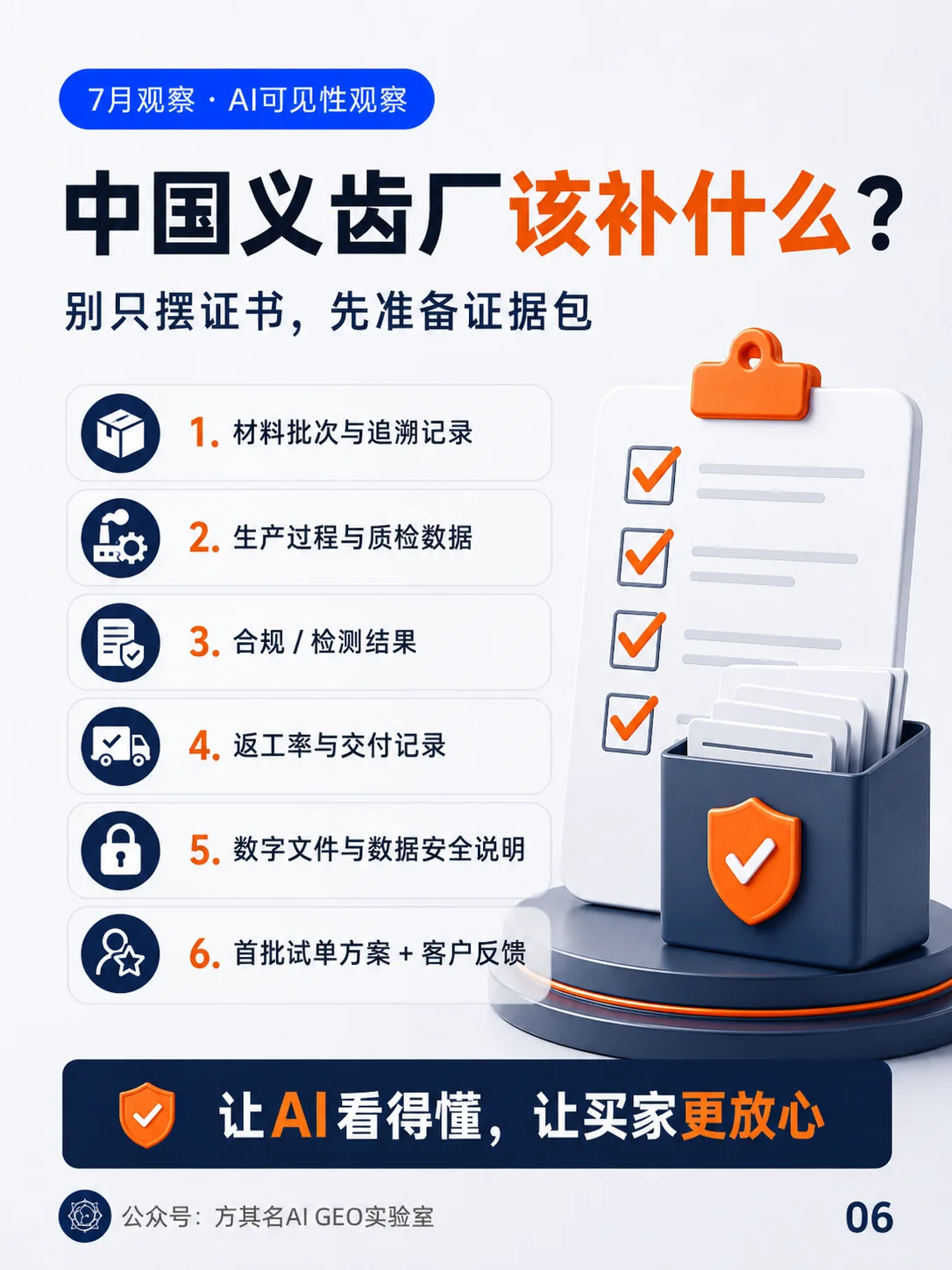
| Client factory evidence page priority | A client factory should publish its own English evidence pages for materials, traceability, data handling, production and inspection records, remake policy, delivery performance and trial-order workflow. |
I ran another AI visibility test: when a US procurement manager asks about Chinese dental labs, what does AI put into the first answer?
This time, I did not ask which factory was “the best.” I moved the question one step closer to a real outsourcing workflow:
An American dental laboratory plans to send crown and bridge and implant restoration cases to a factory in China. Before the first trial order, what would it ask and what evidence would it expect the factory to provide?
One English question, three first answers
I asked the same English question to ChatGPT, Perplexity and Google AI Overview. I recorded only the first answer and did not ask follow-up questions.
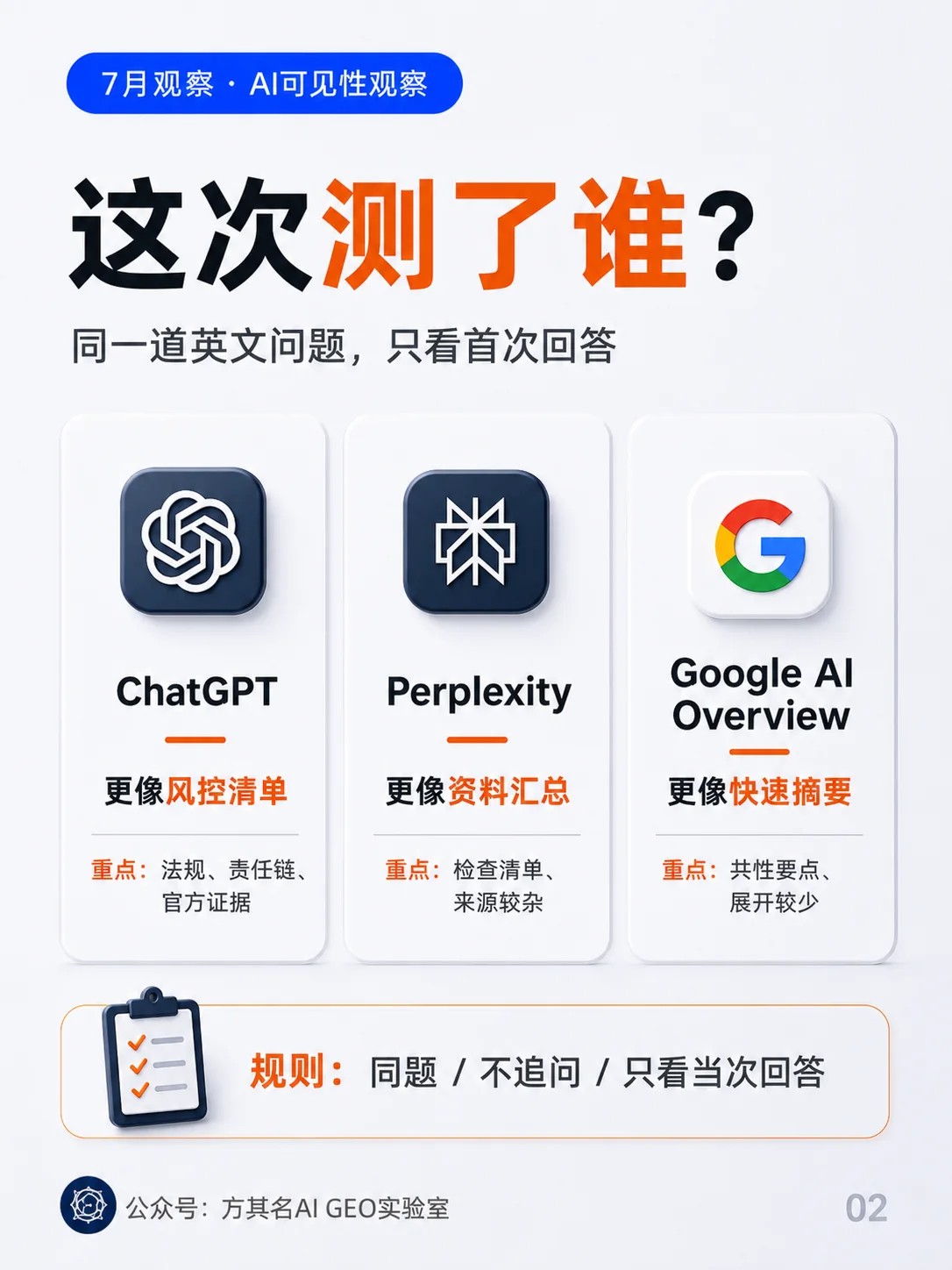
This is a record of how three AI products answered in this test. It should not be treated as proof of how every American buyer operates.
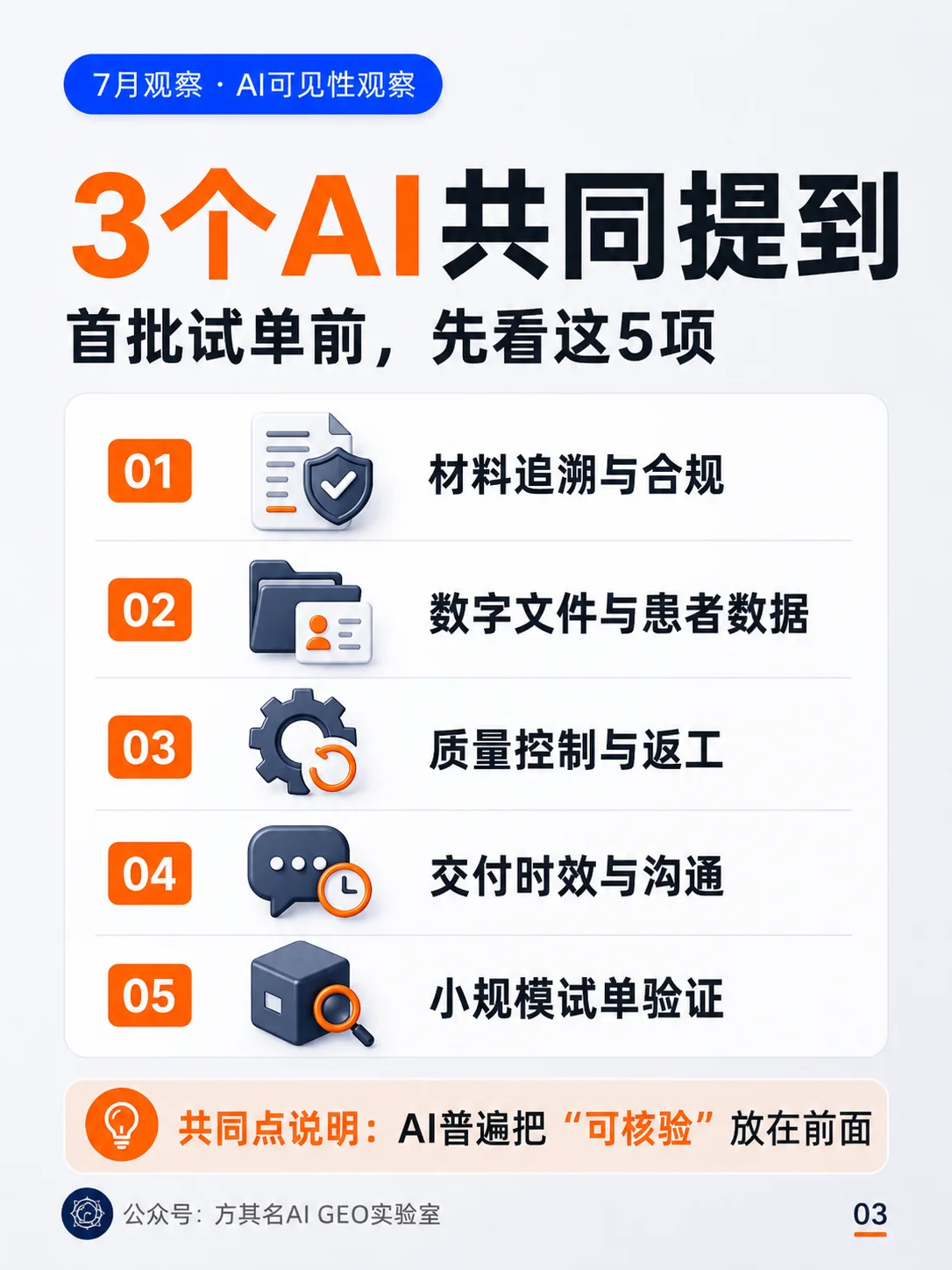
Even with that limitation, all three answers raised several common issues:
- whether materials and compliance records can be traced and verified;
- how digital case files and patient data are handled;
- whether quality, remakes, turnaround time and communication are stable;
- whether the relationship starts with a small set of trial cases.
Certificates were not treated as the finish line
The most useful finding was not the length of each checklist. None of the three answers treated “the factory has certificates” as the end of buyer verification.
A certificate is one statement of compliance. A buyer may still want evidence that can be checked, matched and traced: material lot records, production records, inspection data, remake history and delivery performance.
The three AI answers used different evidence levels
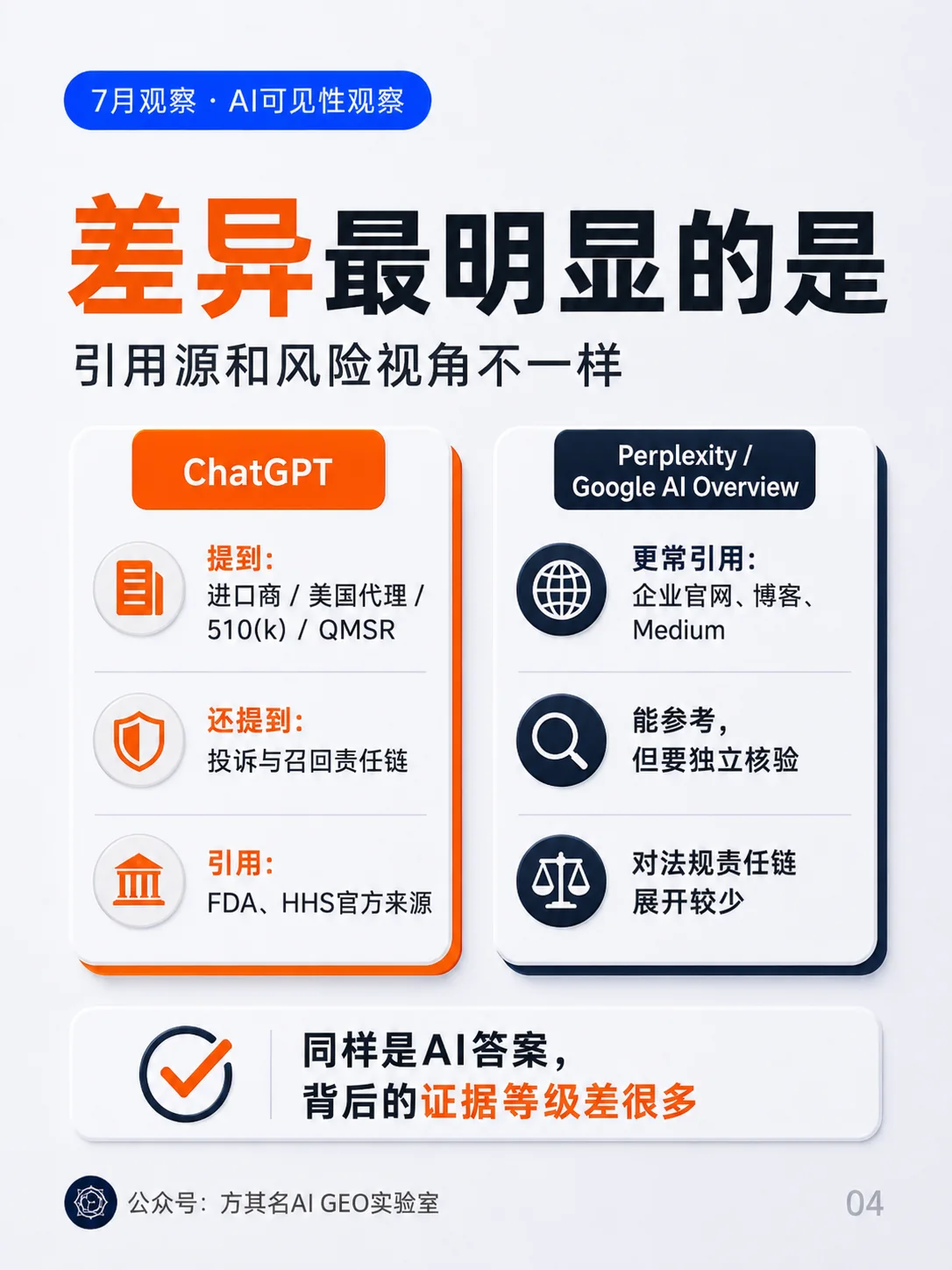
Only ChatGPT went further into the role of the US importer or agent, 510(k), QMSR, and responsibility for complaints and recalls.
In this test, its five direct citations were all FDA or HHS pages.
Perplexity and Google AI Overview more often cited dental laboratory websites, blog posts and Medium articles. Those sources may be useful, but they still require independent verification.
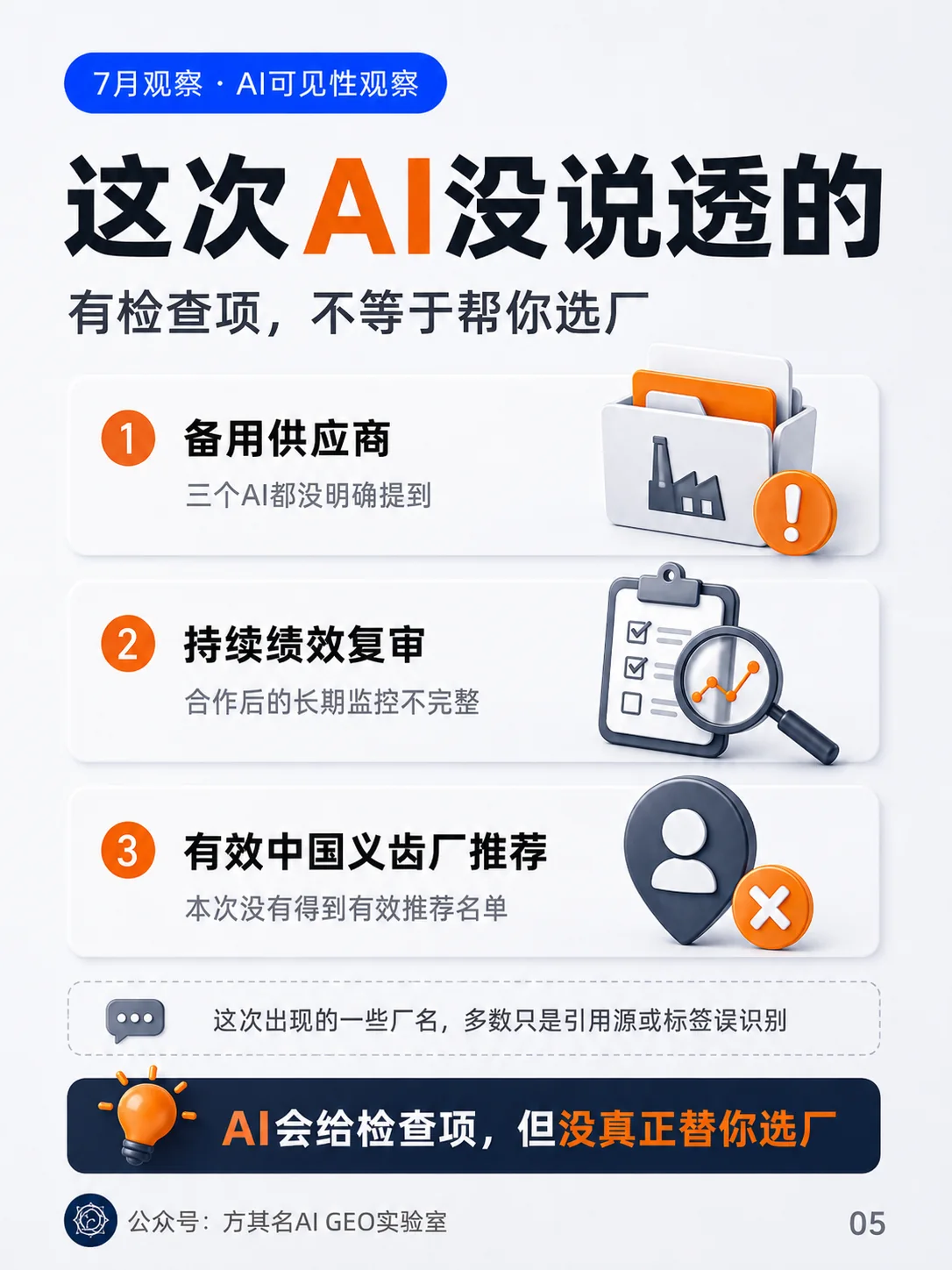
This test did not produce a valid Chinese dental lab shortlist
None of the three answers clearly addressed backup suppliers, and post-onboarding performance reviews were incomplete.
Some factory or website names appeared in the answers. After review, most were only cited sources or mislabeled entities—not genuine AI recommendations of those businesses.
For that reason, this test did not produce a valid recommendation list of Chinese dental labs.
What an export-facing Chinese dental lab should build
The direct lesson for a Chinese dental lab preparing for the US market is simple: displaying a few FDA or ISO certificates on a website does not automatically make an American buyer comfortable.
Certificates matter. The evidence package behind them matters more.
The practical priority is the factory's own English evidence page. AI and buyers need a public page they can cite for materials, traceability, quality controls, delivery, remakes, data handling and the first-trial-order process.
My first two tests examined which companies entered AI shortlists. This test starts a different question: what must a Chinese factory show to have a better chance of passing the first screening by AI and by the buyer?
Test what AI can see before deciding what evidence to build
The entry-level dental lab AI visibility snapshot checks whether AI knows a company, how it describes it, which competitors appear, which public sources it uses, and whether obvious entity mismatches exist.
It does not promise ranking dominance and does not present AI output as procurement due diligence.