AI visibility test profile
| Procurement question | Which Chinese dental labs have verifiable qualifications, legal entities, addresses and sources that may support overseas cooperation? |
|---|---|
| Test date | Tested July 21, 2026; published July 21, 2026; sources checked July 28, 2026. |
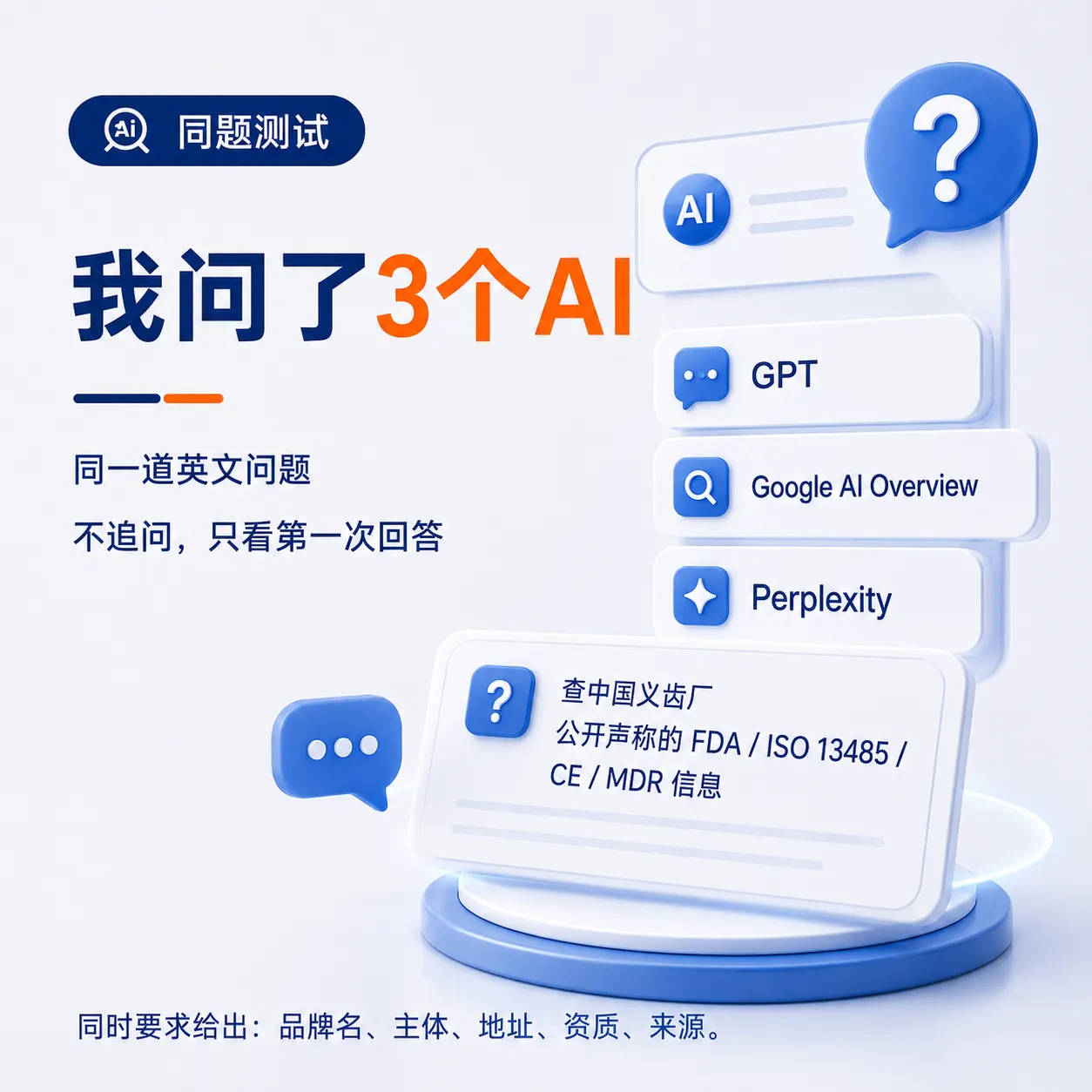
| Models tested | GPT, Google AI Overview and Perplexity, same English procurement question, first answer only, no follow-up prompt. |
| Main conclusion | AI can find real qualification language and still assign certificates, registrations, materials or manufacturer claims to the wrong dental lab entity. |
| Citation source types | Official FDA, ISO and European Commission guidance; AI-cited company pages; qualification descriptions; production facility, material and upstream manufacturer statements. |
| Client factory evidence page priority | A client factory should publish an English qualification evidence page separating brand, legal entity, factory address, certificate holder, certificate scope, product marking, material supplier and source links. |
I used to think the biggest AI visibility risk for a dental lab was not being found at all.
This test exposed a more difficult failure: AI can find the right website and real qualification language, then still get the answer to who owns the qualification wrong.
One question, three AI systems, 15 names
On July 21, 2026, I put the same English procurement question to GPT, Google AI Overview and Perplexity. I did not ask follow-up questions and recorded each first answer.
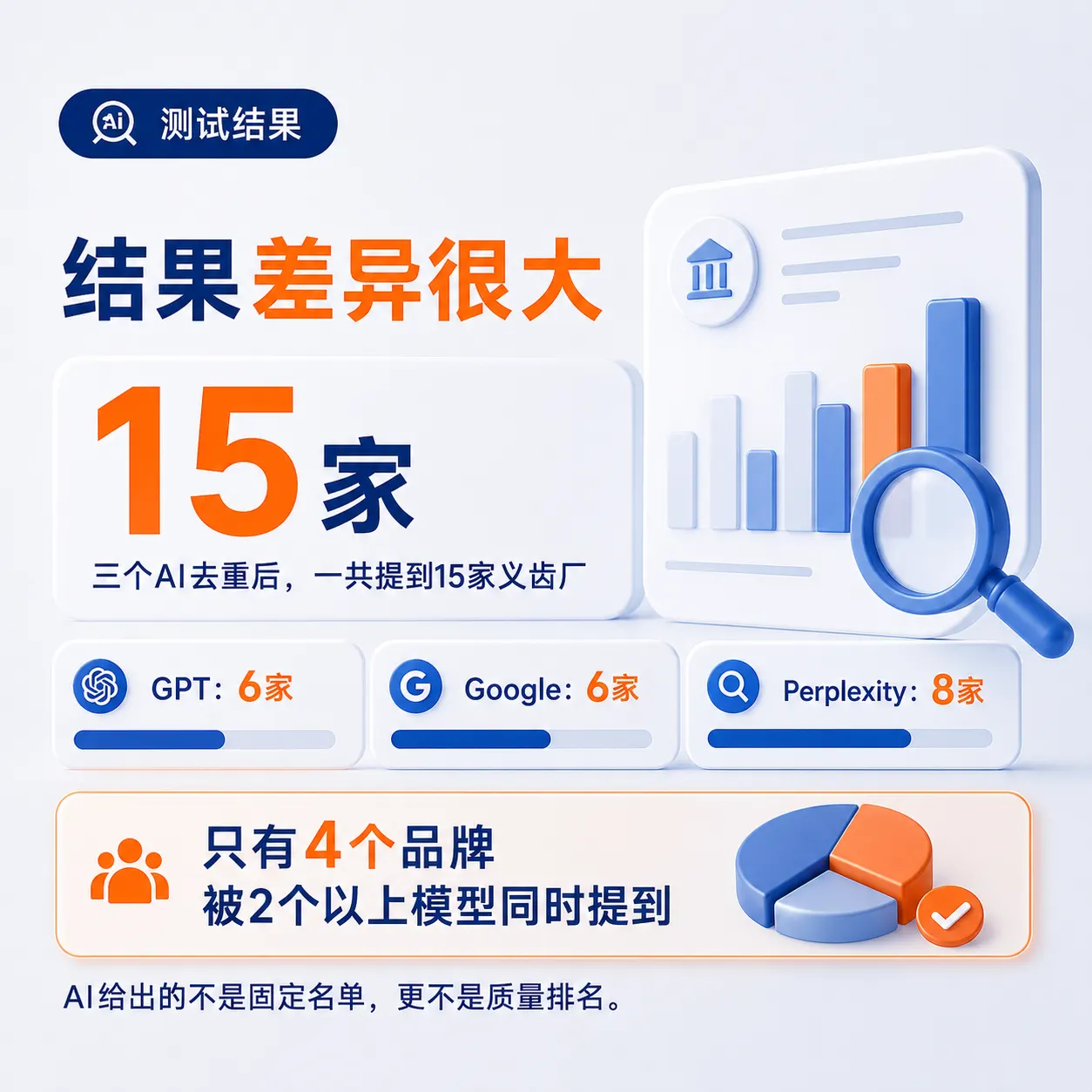
After deduplication, the three answers mentioned 15 Chinese dental lab brands or businesses: six in GPT, six in Google AI Overview and eight in Perplexity. Only four names appeared in at least two systems.
A real page became a misleading qualification summary
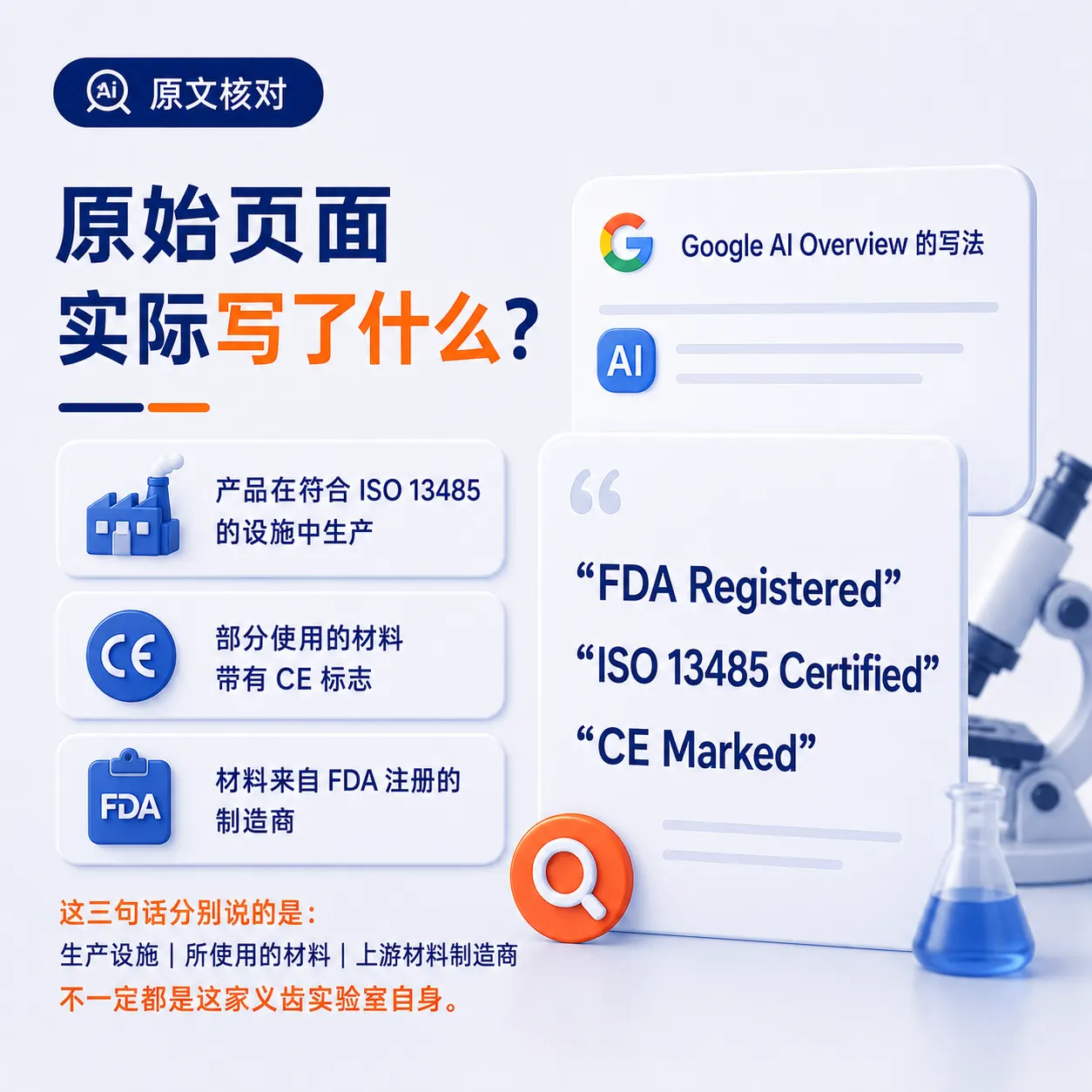
One de-identified case was especially revealing. Google AI Overview described a laboratory as “FDA Registered,” “ISO 13485 Certified” and “CE Marked.” At first glance, it appeared that all three claims belonged directly to the laboratory.
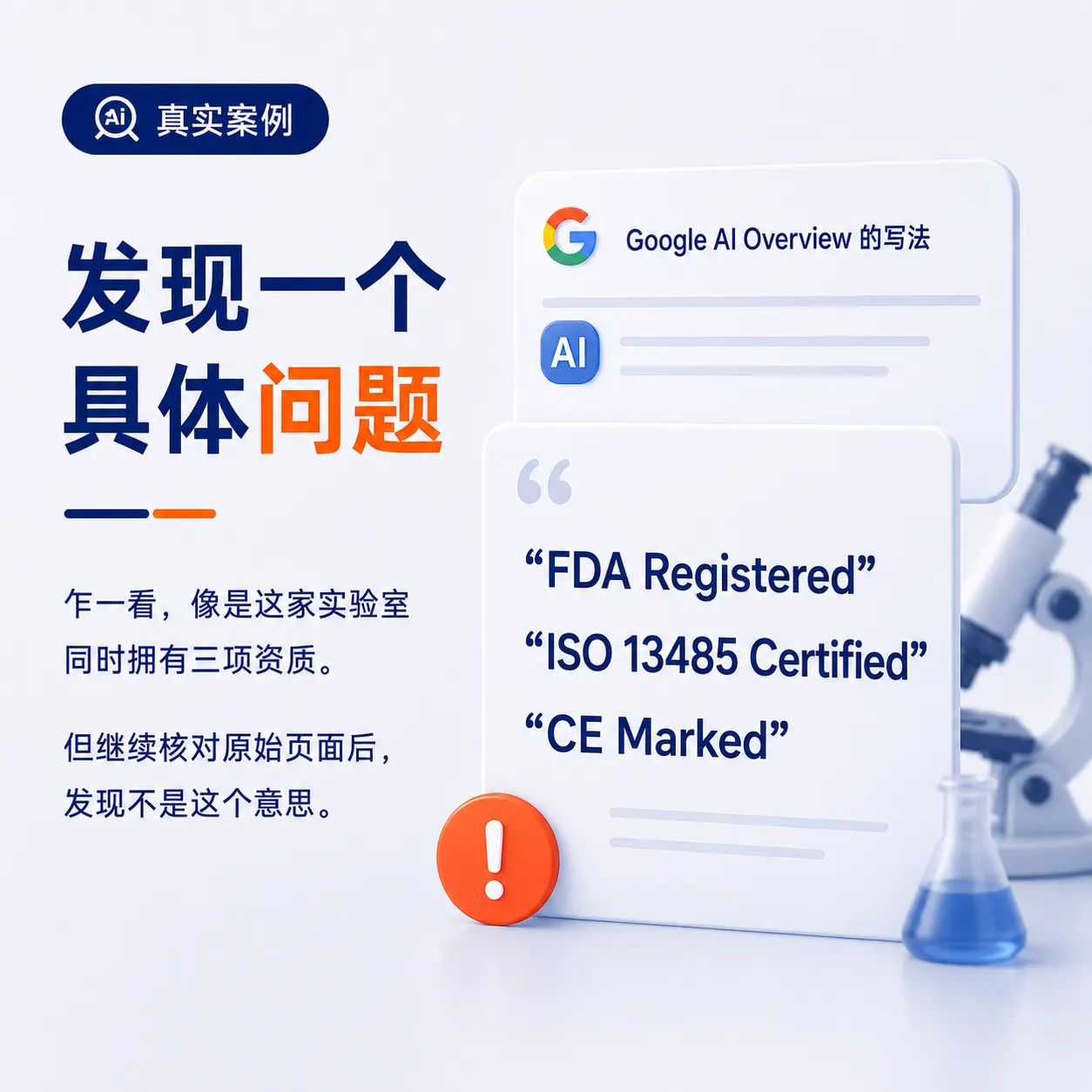
Reading the cited page showed a different structure:
- products were made in facilities operating to ISO 13485;
- some materials carried CE marking;
- materials came from FDA-registered manufacturers.
Those statements refer to a production facility, certain materials and upstream manufacturers. They do not automatically establish that every qualification belongs to the laboratory named in the AI summary.
Where the attribution error happened
The AI compressed three layers—laboratory, material and upstream manufacturer—into one polished company description.
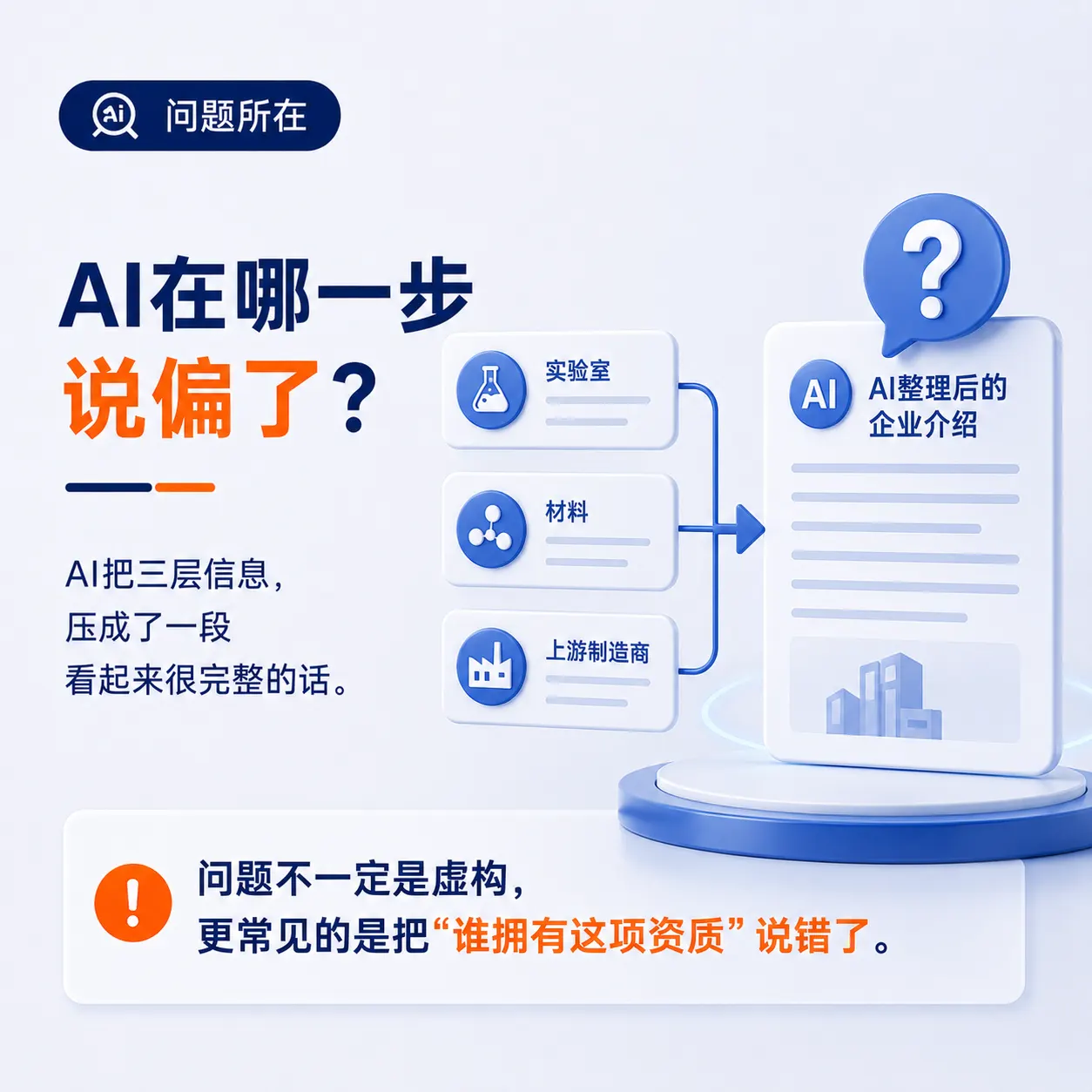
Evidence boundary: this test did not find evidence sufficient to accuse the company of holding false certificates. It identified an AI attribution error that requires entity-level verification.
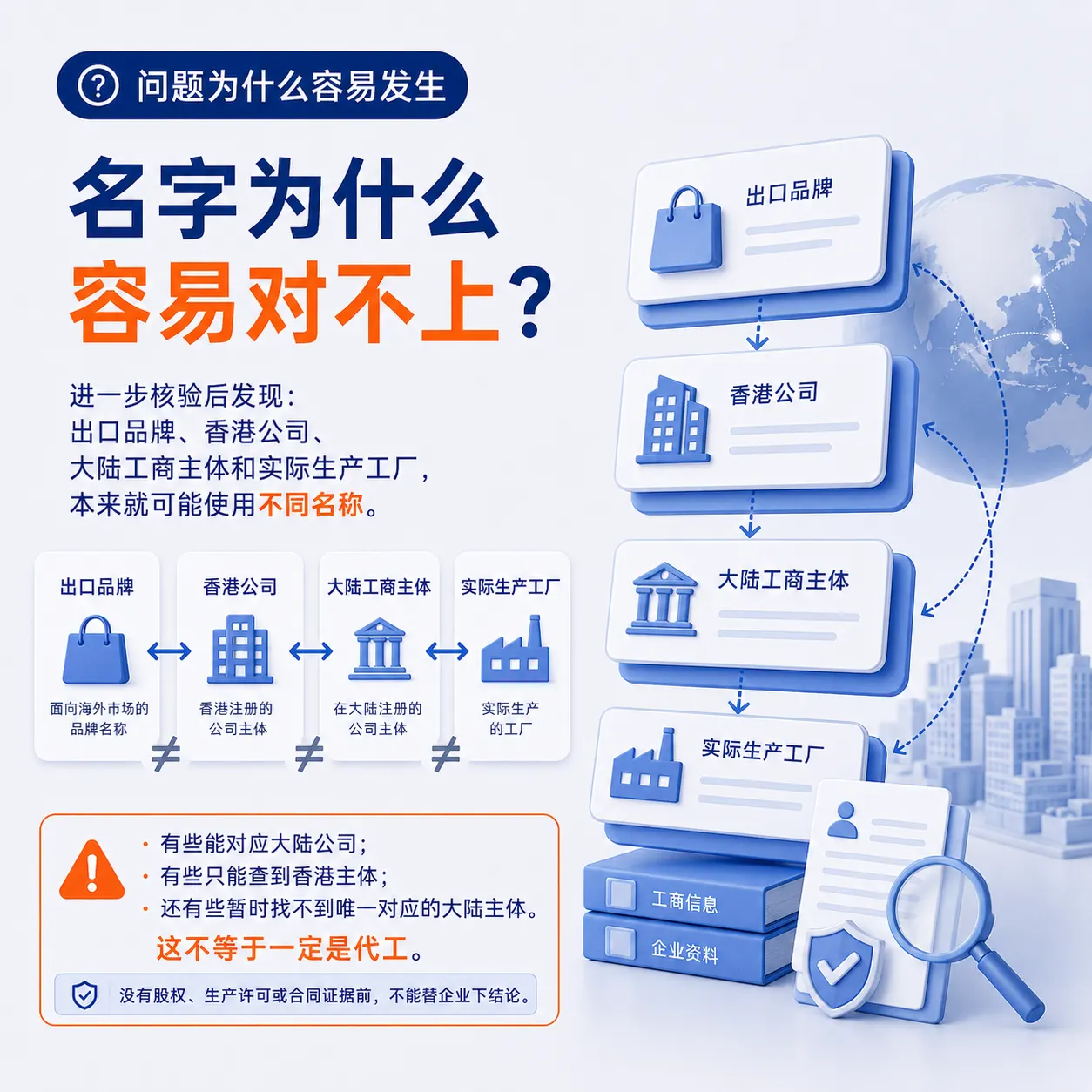
Export brand, company, legal entity and factory may use different names
During verification, another pattern appeared repeatedly. A dental export brand, a Hong Kong company, a mainland legal entity and the actual production facility may all use different names.
Some relationships can be established through public records. In other cases, only the Hong Kong entity is easy to find, or no unique mainland entity can yet be matched from public evidence.
That does not prove the business is outsourcing production. It also does not prove that a certificate is invalid. It means the public evidence is not yet sufficient to close the identity chain.
Registration, a management system and product marking are different layers
The FDA states that establishment registration and device listing do not denote approval, clearance or authorization, and that FDA does not issue device registration certificates to facilities. Read the FDA reminder.
ISO describes ISO 13485 as a quality-management-system standard for organizations involved in medical devices; the holder and scope still need to be read from the actual certificate. See ISO's standard overview.
The European Commission states that CE marking is affixed to a product after the responsible manufacturer completes the applicable conformity steps. See the European Commission guidance.
These official explanations reinforce the core point: a registration, an organizational quality system and a product or material marking should not be collapsed into a single generic “certified company” label.
For a client factory, the repair should happen on the factory's own English evidence page. The page should separate which entity holds which document, which address it covers, and whether the claim belongs to the factory, a product, a material or an upstream manufacturer.
AI seeing you is not the same as AI understanding you
A dental lab should check four questions after it appears in an AI answer:
- Did AI use the correct factory or brand name?
- Which legal entity actually holds the registration or certificate?
- Can the production address be matched to that entity?
- Does the evidence cover the company, its quality system, a finished product, a material or an upstream manufacturer?

Check whether AI assigns your qualifications to the right entity
The entry-level AI visibility snapshot checks whether AI knows the company, how it describes the brand and factory, which sources it cites, and whether registrations or qualifications are obviously assigned to the wrong entity.
It does not promise ranking, fabricate recommendations, verify product quality or replace regulatory and commercial due diligence.